September 13, 2025 · Dallas Fort Worth
When Dallas–Fort Worth driveway runoff aims at the garage
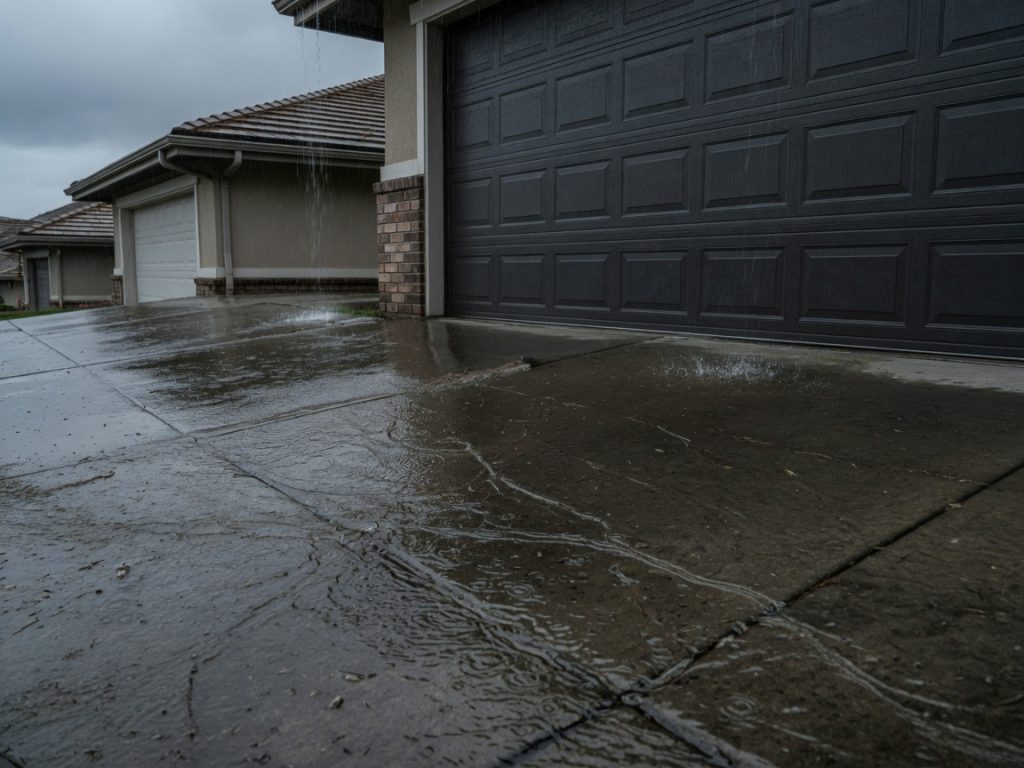
If the drive pitches to the door, every storm is a test the slab will lose. In Dallas–Fort Worth, that usually sits on Blackland and expansive clays that swell wet and shrink dry. The weather is fast summer storms and flash volume that arrives in minutes. Lots are shaped by rear-lot drainage and shallow HOA swales that dump onto one pad. Homeowners in Arlington and Denton see the same pattern after a real storm: water that will not leave, or water that leaves the wrong way.
North Texas fails in two directions. The same street can have a bowl that never dries and a slope that strips mulch in one cell. A channel drain at the right elevation, then a line that actually leaves the property. Towels are not a system. Drainage Pro treats Dallas–Fort Worth as a market with terrain, not a city name dropped into a template.
Why this shows up in Dallas–Fort Worth
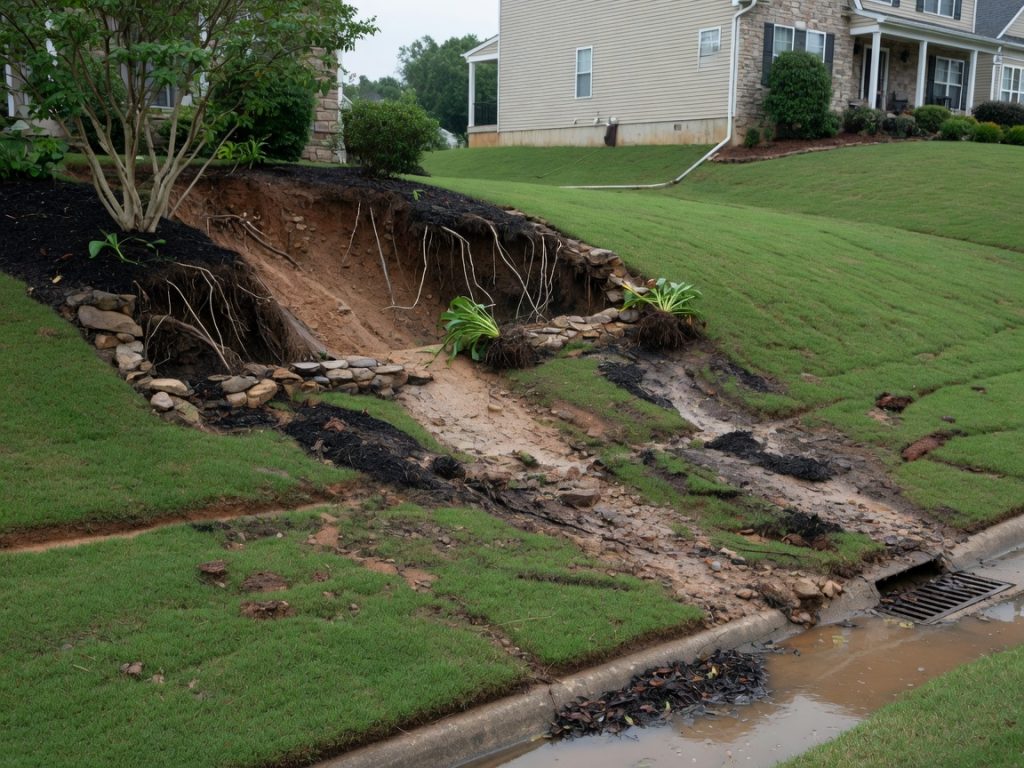
The risk here is water that will not leave the clay, or water that leaves too fast and takes the bed with it. That is not a personality trait of the lawn. It is hydrology plus how the subdivision was built. A lot in Arlington and Denton can look finished and still have no designed path for roof water, let alone a neighbor’s downspout.
Before anyone opens a trench we also respect city-by-city storm and easement rules, plus 811 before digging. Outdoor drainage is not a free-for-all because it is not indoor plumbing.
What gets misread
The usual mistake is buying a product. Wet grass becomes a French drain. A wet garage becomes a longer splash block. Those guesses ignore source. Roof water, irrigation, groundwater, driveway sheet flow, and grade are different paths. See the problems we solve and match the water you actually have.
This is the same failure we map on driveway runoff — a homeowner problem, not a product name.
The second mistake is skipping discharge. Collected water still has to exit somewhere legal. “It should soak in over there” is how Dallas–Fort Worth clay returns the storm to the same bowl.
The WaterPath™ sequence
We do not guess and start digging. The Drainage Pro WaterPath process is source, capture, move, discharge, restore, verify.
- Source. Where is it coming from on this lot — roof, neighbor, irrigation, groundwater, drive, or grade?
- Capture. Basin, channel, swale, or perforated line, at a measured elevation.
- Move. Solid pipe to convey. Perforated pipe to collect. Not a blend that recharges the lawn.
- Discharge. Daylight, pop-up, approved storm connection, or a pump. Never the neighbor’s yard.
- Restore. Sod, beds, hardscape, irrigation repairs. The property should look finished.
- Verify. Flow test, elevations, photographs, as-built. If it cannot be shown, it was not finished.
Solutions that may belong on this path
Depending on the water, the work may include channel drains, solid pipe, sump pump. Those are tools. The solution architecture is surface water, subsurface water, and water movement. A Dallas–Fort Worth lot often needs more than one.
Whole-property work is for the house that already had a small trench and still floods. Read whole-property systems if that is the history.
How to watch the water this week
After the next rain, walk the lot twice: once while it is still falling, and once the next afternoon. Note the downspouts, the wall, the drive, and the lowest grass. If the irrigation ran, write that down. A pressurized leak can mimic a drainage failure and waste a trench. If the wet appears only when the sprinklers operate, start with irrigation, not pipe.
Look at the neighbor’s grade without making it a fight. Uphill discharge is a source. Your job is still a legal path on your side of the line. Photograph the water in place. Time matters. A pond at hour two is a different diagnosis than a stain that is gone by dinner.
Do not open a weekend trench in Blackland and expansive clays that swell wet and shrink dry. Corrugated pipe aimed at a vague low is how Dallas–Fort Worth lots get a second, more expensive visit. The cheap move is the diagnosis. The expensive move is digging twice.
What to do next
Walk the lot after the next rain. Note where water sits the next afternoon. Note the downspouts. Then book a Drainage Analysis — a paid diagnostic credited toward an approved installation. That is how Dallas–Fort Worth work starts. Not with a free guess and a trencher.
More field notes from this market sit below. The Dallas–Fort Worth market page holds terrain, permitting notes, and the local crew standard.